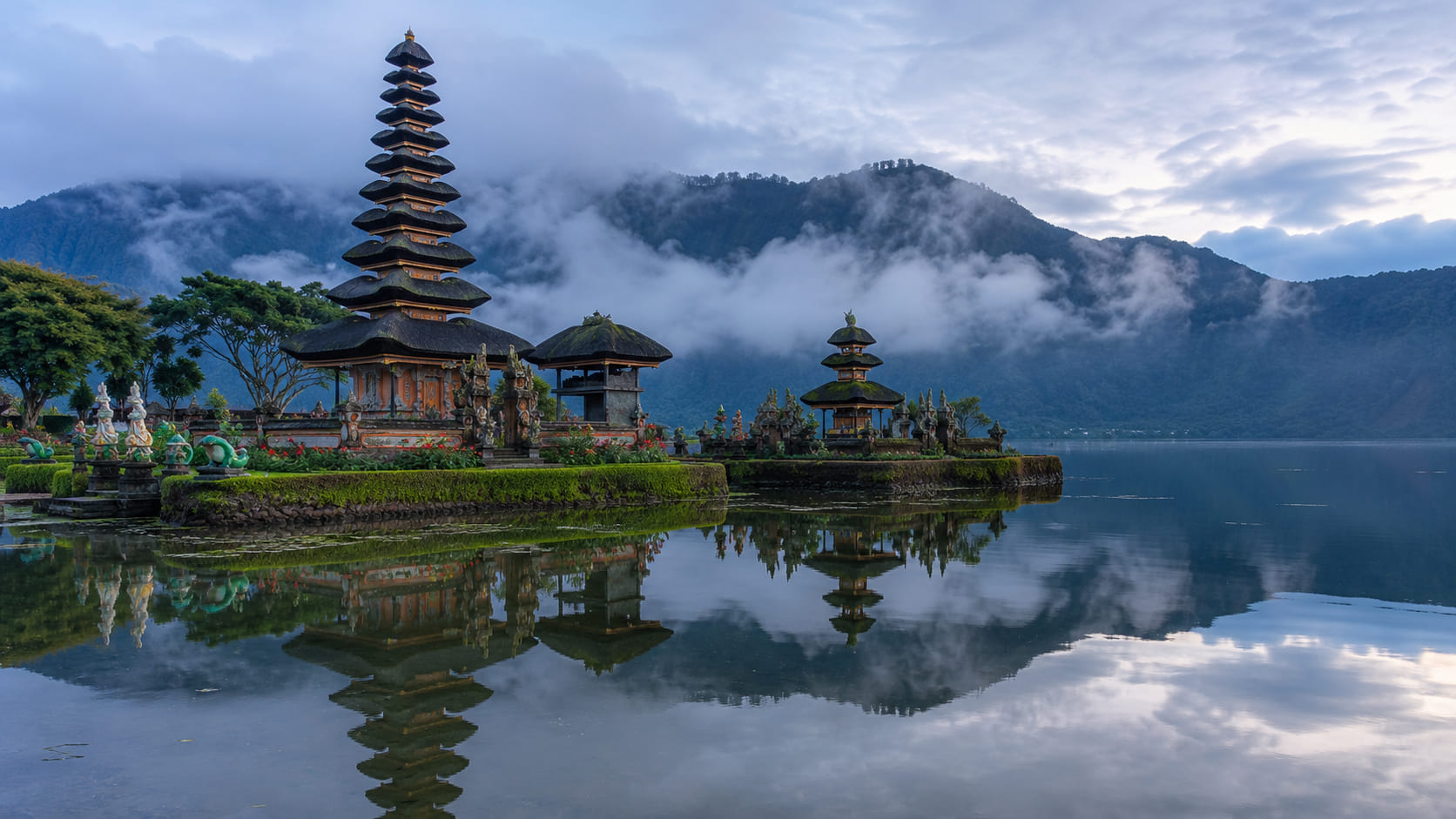
Pura Ulun Danu Beratan is one of Bali’s most photographed temple complexes, set beside Lake Beratan in the Bedugul highlands. The image most visitors know shows tiered meru shrines appearing to float on the water. The reality is broader: this is a carefully maintained visitor site, a functioning sacred complex and part of a highland environment where water has deep practical and religious importance.
Because the location is cooler and often cloudier than southern Bali, a visit feels different from the island’s coastal temples. August is generally part of the drier season, yet mountain weather can still shift quickly. Come prepared for changing conditions and give yourself time to look beyond the postcard view.
Why the temple is connected to water
The name Ulun Danu is commonly understood in relation to the head or source of the lake. The complex is associated with the veneration of water and Dewi Danu. Lake Beratan is one of Bali’s important highland lakes, and water from mountain regions supports communities and agriculture far beyond the immediate shoreline.
Indonesia’s official tourism description explains that the complex contains several sacred buildings and connects the site with the worship of the lake and water. It also describes shrines associated with different deities. The official page is available through Indonesia Travel.
Visitors should be careful not to reduce this context to a vague idea of “water spirituality.” In Bali, water is tied to ritual, agriculture, temple networks and everyday life. The sacred meaning is specific to the religious tradition and community that maintains it.
The floating-temple effect depends on the lake
The famous image is created by the relationship between the shrines and the water level. Depending on conditions, parts of the complex can appear more strongly separated by the lake. In other moments, the shoreline is more visually obvious.
Do not judge the quality of the visit by whether you reproduce a photograph you saw online. Mist, low cloud and changing light are part of the Bedugul environment. They can make the temple less postcard-perfect but more atmospheric and revealing of its highland setting.
What to notice in the architecture
Tiered meru roofs dominate the familiar view, but the complex contains more than those towers. Look at the relationship between gates, courtyards, pavilions, shrines, gardens and water. A basic guide to Balinese temple architecture will help you recognize how the site organizes movement and sacred space.
Do not assume that every structure visible from the public area is open to tourists. Active worship may take place while visitors are circulating nearby. Restricted areas and temporary closures should be treated as normal features of a functioning temple.
How to plan an August visit
August is typically busy in Bali, and Bedugul is a popular day-trip area. Arrive earlier in the day if you prefer fewer people and softer light. Mornings can also offer a better chance of seeing the lake before thicker cloud develops, although weather is never guaranteed.
Bring a light layer even if you leave a hot beach area. The elevation makes the air noticeably cooler, especially when wind and cloud move across the lake. A compact rain jacket is still useful in the dry season because localized showers can occur.
The roads through the highlands can slow around markets, attractions and weekend traffic. Do not pack too many distant stops into the same day. A temple visit becomes less meaningful when every stop is reduced to twenty hurried minutes.
Temple etiquette still applies at a major visitor attraction
Ulun Danu Beratan has lawns, flowers, photo areas and visitor facilities, which can make parts of the site feel like a park. That should not blur the distinction between recreational space and sacred space.
Wear modest clothing and use a sarong or sash where required. Keep your voice low near prayer areas. Do not touch offerings, sit on shrine platforms or cross barriers to improve a photograph. When a ceremony is taking place, let worshippers move through gates and pathways without interruption.
Families with children should explain these boundaries before entering. The open grounds make the site accessible for many visitors, but children should still be kept away from offerings and restricted structures.
Photography without turning the temple into a set
The lake view is easy to photograph, especially in calm conditions, but patience works better than staging. Wait for natural gaps in foot traffic instead of asking worshippers or staff to move. Avoid elaborate poses directly in sacred thresholds and do not use ceremonial objects as props.
Weather can create better images than perfect blue sky. Reflections, mist and low cloud show the temple in its actual environment. They also encourage a wider view of the setting rather than another tightly cropped image of the same meru.
What makes the visit worth slowing down for
Ulun Danu Beratan is often presented as a quick photographic stop between south Bali and the northern highlands. That approach misses the most useful part of the visit: seeing how sacred architecture can be tied directly to a body of water and a wider setting.
Spend time watching the lake, noticing the difference between public and sacred zones, and reading any interpretive information available on site. The goal is not to collect every viewpoint. It is to understand why this location matters beyond its visual appeal.
When you leave, the floating shrines may still be the image you remember first. But the better memory is the relationship between water, highland climate, religious practice and architecture. That is what turns Ulun Danu Beratan from a famous photograph into a meaningful temple visit.