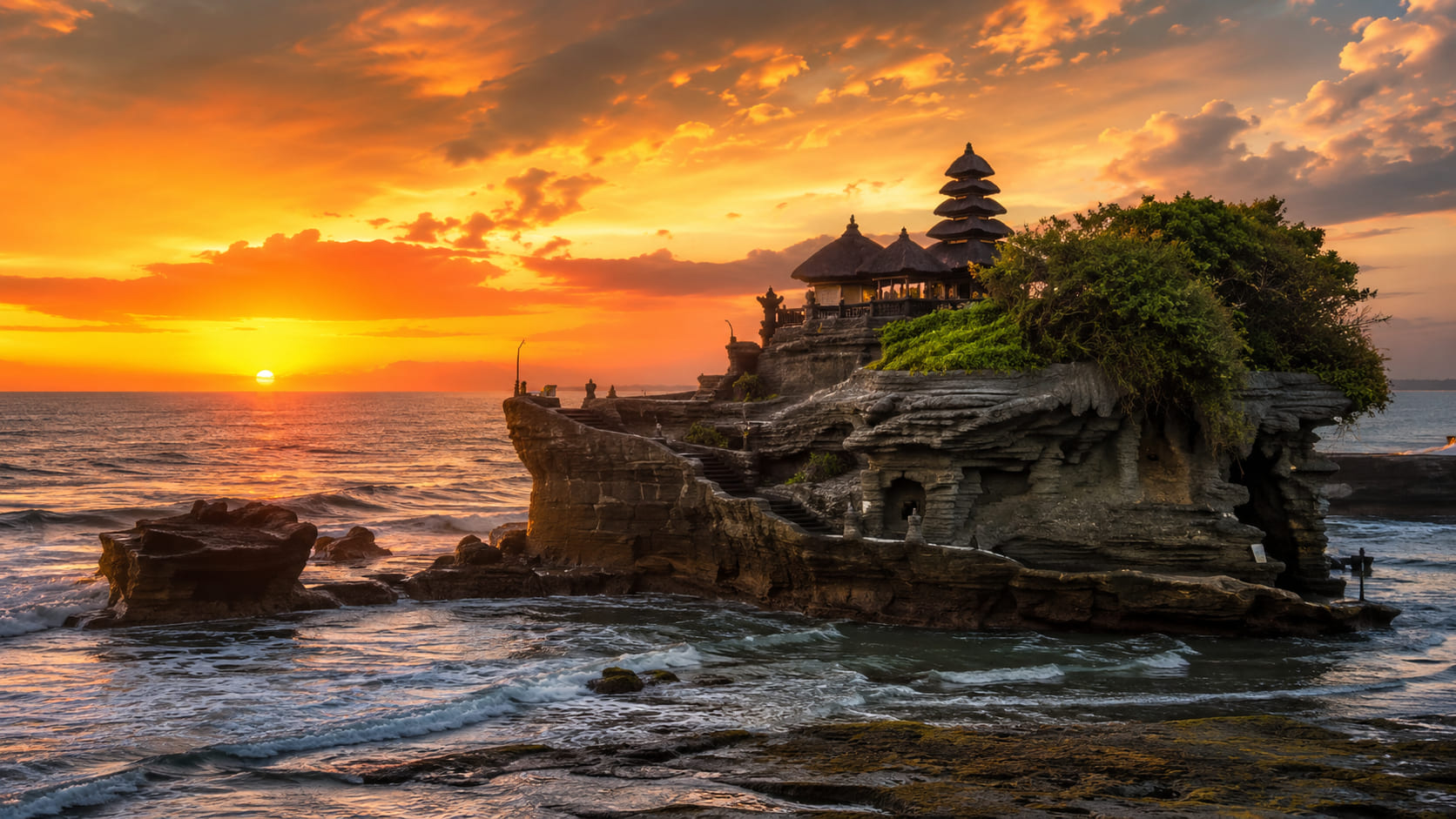
Tanah Lot is one of Bali’s most recognizable temple settings: a sacred structure rising from a rocky outcrop on the coast of Tabanan, surrounded by sea at high tide and approached across exposed rock when conditions allow. Its silhouette at sunset has made it one of the island’s busiest visitor sites, but the setting is only part of the story.
Pura Tanah Lot is a living place of worship associated with Bali’s coastal sacred geography. Visiting well means understanding the difference between the wider tourism area and the temple itself, watching the ocean conditions, and accepting that access to sacred areas is not the same as access to a viewpoint.
Start with the coastline, because the tide shapes the visit
The first thing to understand is that Tanah Lot sits on an offshore rock formation. The visual character of the site changes dramatically with the tide. At high tide, waves can surround the rock and make the temple appear fully separated from land. At lower tide, more of the rock shelf becomes exposed.
Do not treat low tide as a promise that you can enter the temple. Physical access to the base of the rock and religious access to sacred areas are different questions. Follow barriers and staff instructions, and never climb toward a shrine because you see someone else doing it. Sea conditions can change quickly, and wet rock is slippery even in otherwise good weather.
Indonesia’s official tourism site describes Tanah Lot as a temple on a rock off the Tabanan coast and connects its traditional history with the priest Dang Hyang Nirartha. You can read the current official overview on Indonesia Travel.
August brings good sunset odds and bigger crowds
This guide is scheduled for August, which usually falls within Bali’s drier season. That often means lower rainfall and a better chance of a clear evening, but no season guarantees a dramatic sunset. Coastal haze and cloud can appear at any time.
Dry-season popularity also means crowds. If sunset is your priority, arrive well before the final light rather than racing into the complex at the busiest moment. Earlier arrival gives you time to understand the site, walk the public paths and choose a viewpoint without blocking narrow areas.
Leave more time than a map estimate suggests for the drive. Traffic around popular routes in southwest Bali can build in the afternoon, especially during holiday periods. A rushed arrival is the easiest way to turn a temple visit into an impatient photo stop.
The famous view is part of a larger sacred complex
Many first-time visitors focus entirely on the offshore temple and overlook the wider sacred and coastal setting. Slow down. Notice the gateways, smaller shrines, processional areas and the way the complex relates to the sea.
Understanding the basic logic of Balinese temple architecture helps here. Gates and courtyards are not simply decorative frames. They organize movement and degrees of access. At a heavily visited site such as Tanah Lot, this distinction matters because tourist circulation can sit very close to active religious space.
During ceremonies, normal visitor routes may change. Worshippers carrying offerings have priority. Do not stand in gateways or ask people to pause a procession so you can take a photograph.
Dress for a temple, not only for a sunset
Tanah Lot has a coastal atmosphere, but it is still a temple site. Wear modest clothing and follow local requirements regarding sarongs and sashes in temple areas. Beachwear is not appropriate simply because the ocean is nearby.
Practical footwear is also useful. Stone and rock surfaces can be uneven or wet, and spray can reach exposed areas. Keep a safe distance from waves and do not climb onto slippery ledges for a cleaner photograph. The Indian Ocean can produce strong surf, and visual calm from a distance should not be mistaken for safe footing.
Photography works best when you stop competing for the same frame
The classic Tanah Lot silhouette attracts large numbers of photographers. You can still take good images without turning the visit into a contest for the front row. Move away from the most congested points and look for wider views that show the coastline, temple and changing tide together.
Avoid drones unless you have confirmed that they are permitted by the relevant authorities. Rules can change, and sacred sites may apply restrictions beyond ordinary aviation requirements. Never fly directly over worshippers or ceremonies.
With people, the rule is simpler: architecture is generally safer to photograph than private devotion. If someone is praying, making an offering or taking part in a ceremony, do not move close for an intimate portrait without permission.
Stories and legends should be presented as traditions
Tanah Lot is surrounded by stories, including traditions about Dang Hyang Nirartha and sacred sea snakes associated with protection of the temple. These stories are part of the site’s cultural identity, but visitors should distinguish tradition from verifiable historical fact.
The same applies to simplified claims that Bali’s coastal temples form a perfectly engineered chain in which every temple can see the next. The island does have important sea temples and a strong relationship between religion and setting, but popular travel narratives often compress complex traditions into neat diagrams.
A better way to plan your visit
Arrive early enough to walk without rushing. Check tide and weather conditions before leaving, but treat them as planning information rather than guarantees. Dress respectfully, follow the visitor route, and give religious activity more space than tourism activity.
If the sunset is hidden by cloud, the visit has not failed. Tanah Lot is still a powerful example of how Balinese sacred architecture can be positioned in direct conversation with a difficult natural environment. Watch the tide move around the rock, notice how people use the site, and remember that the temple was not built as a sunset platform.
The strongest visit is one in which you leave with more than the familiar silhouette. Tanah Lot makes sense when you see the ocean, architecture, ritual boundaries and visitor pressure together. Respect those layers, and the site becomes far more interesting than a single photograph.