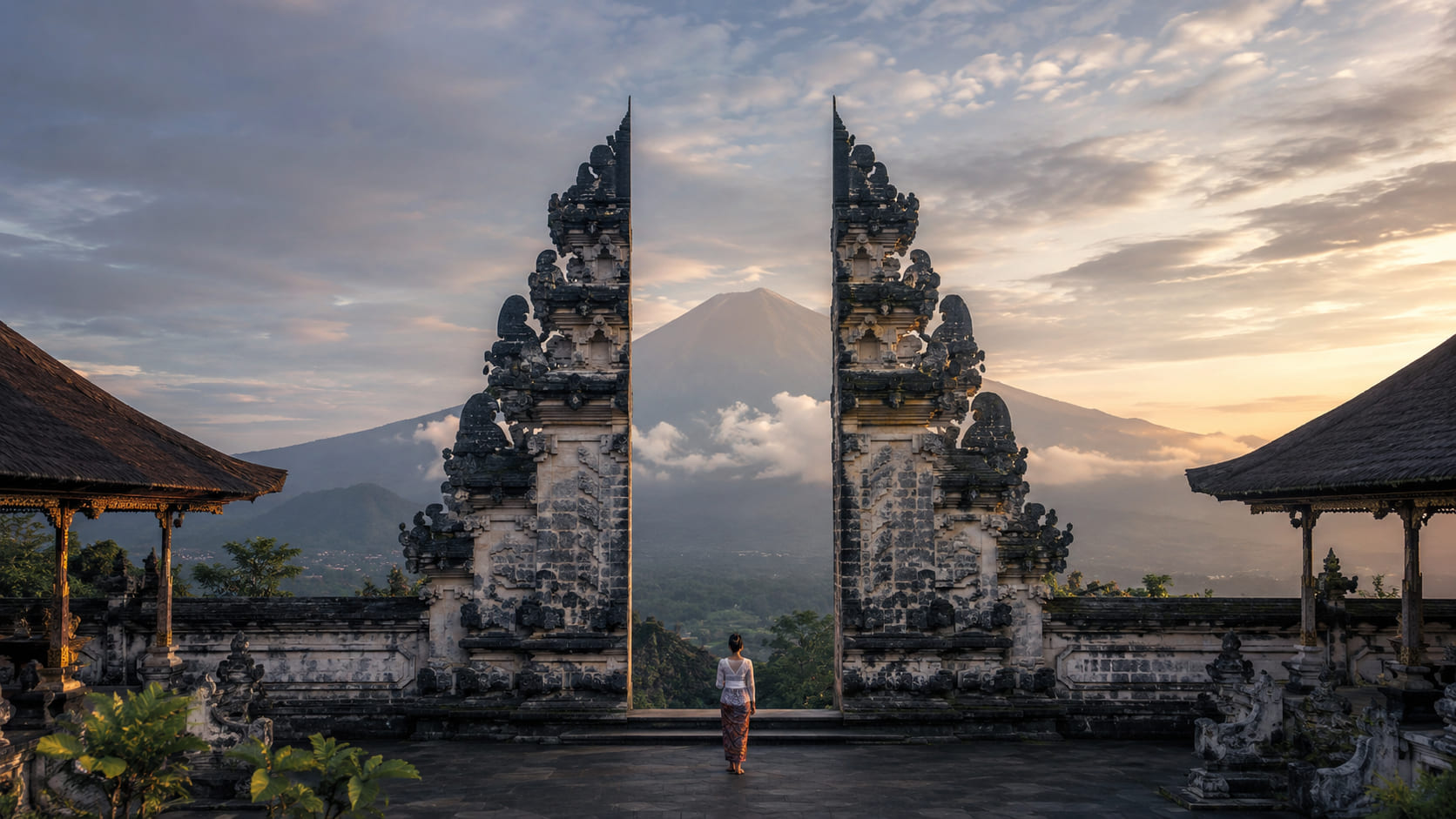
Pura Lempuyang is frequently reduced to one image: a split gateway framing Mount Agung. That photograph has become so dominant that many visitors arrive, wait for a turn at the gate and leave without understanding that Lempuyang is a much larger sacred complex on the slopes of Mount Lempuyang in eastern Bali.
A better visit starts by separating the famous photo location at Pura Penataran Agung Lempuyang from the wider pilgrimage route and the higher temples associated with Lempuyang. The site is not one gate. It is a sacred mountain setting, and visitor access sits alongside ongoing worship.
Know which part of Lempuyang you are actually visiting
Indonesia’s official tourism guide describes Lempuyang as a complex of multiple temples along a route that ultimately reaches Pura Lempuyang Luhur higher on the mountain. Most day visitors concentrate on Pura Penataran Agung, where the well-known split gate frames Mount Agung in clear weather.
Read the current official overview on Indonesia Travel before deciding how much of the complex you want to experience. Transport arrangements, visitor routes and local rules can change, so check current information rather than relying on an old social-media itinerary.
The photo queue can distort the purpose of the place
At busy times, visitors may spend a large part of their trip waiting for a short turn at the famous gate. There is nothing wrong with taking a photograph, but the queue can create the impression that the gateway is the attraction and everything else is background.
Step away from that mindset. Look at the courtyards, shrines, stairways and mountain orientation. Read about the role of gates in Balinese temple architecture so the split gate becomes a threshold with architectural context rather than only a frame for Mount Agung.
Do not block worshippers or processions because your photo turn has arrived. Religious use takes priority over the informal rhythm created by tourism.
September can be clear, but Mount Agung owes you nothing
This guide is scheduled for September, near the end of Bali’s typical dry season. Earlier mornings can offer clearer views, but mountains create their own weather. Cloud can cover Mount Agung even on an otherwise bright day.
Do not treat cloud as a reason to behave impatiently toward staff or extend a photo session while waiting for the summit to appear. The temple is still the temple when the mountain is hidden. In fact, mist can make the relationship between architecture and highland setting easier to appreciate.
Going higher requires a different level of commitment
Visitors who continue beyond the most photographed area should prepare for a more demanding experience. Routes can involve long stairways, steep sections and significant walking. The full pilgrimage context is not equivalent to a casual sightseeing loop.
Carry water, wear appropriate footwear and avoid starting a longer ascent too late in the day. Ask locally about current access conditions and ceremony restrictions. Do not assume that every temple on the route is open to tourists at all times.
Physical effort does not grant additional religious access. Even after a long climb, sacred inner areas may remain restricted to worshippers.
Dress and behavior matter more than the popularity of the site
Lempuyang’s social-media fame does not make it less sacred. Wear appropriate temple clothing, including a sarong and sash where required, and follow local instructions about exposed shoulders, behavior and entry.
Keep voices low in prayer areas. Do not sit on shrines or raised sacred structures. Do not imitate prayer gestures only for a dramatic photograph. If you do not understand the meaning of an action, it is better to observe than perform.
Be careful with simplified spiritual claims
Lempuyang is often described online with sweeping claims about “energy portals,” guaranteed purification or supernatural transformations. These statements usually tell you more about modern wellness marketing than about Balinese Hindu practice.
Respectful cultural travel does not need to strip the temple of religious meaning, but it should avoid inventing universal experiences. Lempuyang matters because local communities maintain it as a sacred place. Visitors can appreciate that significance without claiming personal access to beliefs they have only just encountered.
What a good Lempuyang visit looks like
Arrive early enough that you are not racing the crowds. Decide in advance whether you are mainly visiting Pura Penataran Agung or attempting a longer route. Bring modest clothing, practical shoes and patience.
Take the famous photograph if it matters to you, then put the camera away for a while. Watch how the temple is used. Notice the transition through gates. Look toward Mount Agung when it is visible, but also look inward at the compound itself.
The most useful correction to the usual Lempuyang story is simple: the “Gates of Heaven” are not the whole destination. Once you understand that, the visit becomes less about reproducing one image and more about encountering a living sacred setting with the time and restraint it deserves.