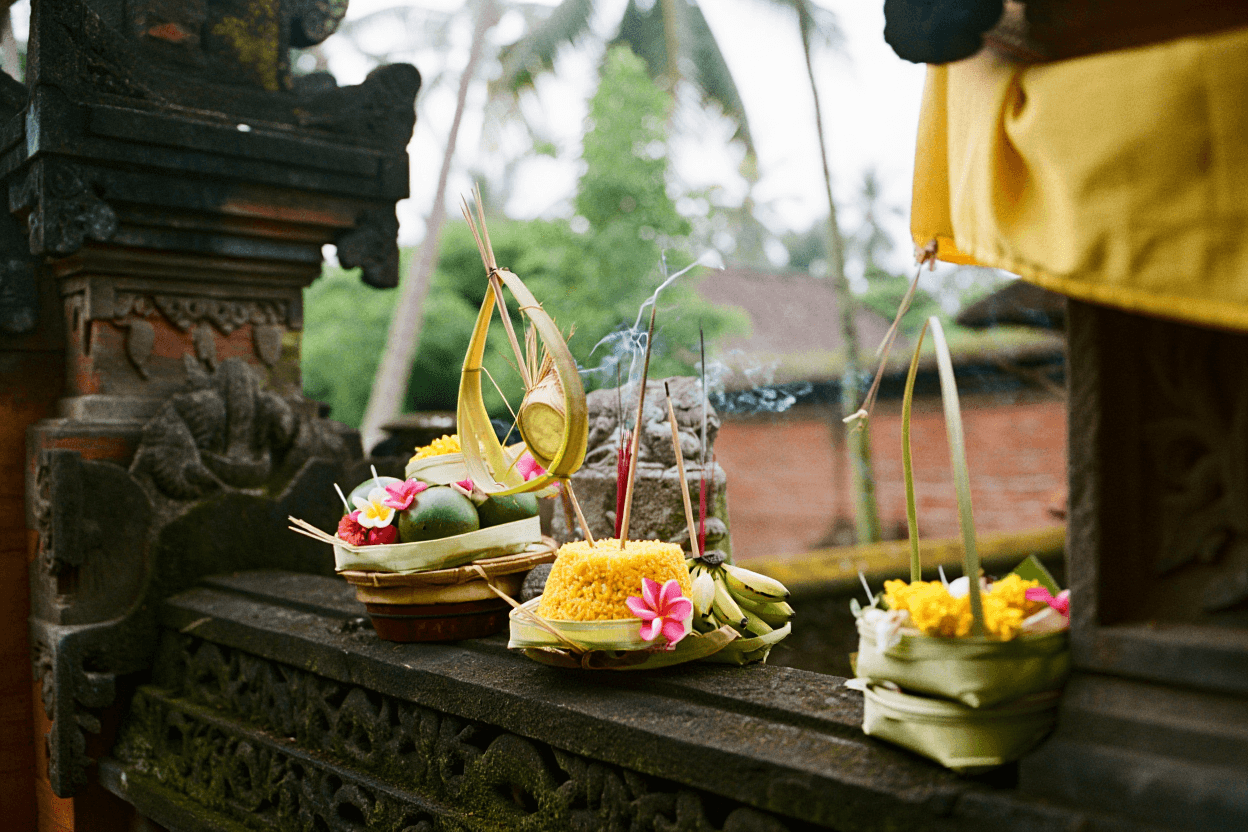
Pura Besakih is often called Bali’s Mother Temple, and that title is not casual marketing. It is the island’s largest and holiest Hindu temple complex, set high on the slopes of Mount Agung in Karangasem. Indonesia’s official tourism site describes Besakih as the most significant and holiest temple for Hindus in Bali, located at about 1,000 metres above sea level on the southwest slope of Mount Agung. You can read the official overview here: Pura Besakih on Indonesia Travel.
Because of that importance, Besakih should not be treated as a quick sightseeing stop. It is a major religious complex and a place of ongoing worship. Visitors come for the dramatic mountain setting, long stairways, layered gateways, and views across eastern Bali, but the cultural value comes from understanding that this is one of the central sacred places in Balinese Hindu life.
Plan enough time. From Ubud, the drive is commonly around two hours depending on traffic and weather. From the southern resort areas, it can take longer. May is usually moving into Bali’s drier part of the year, so conditions may be better than during heavy rainy months, but Mount Agung’s slopes can still be cloudy or wet. Start early if you want cooler air, clearer views, and more time to move calmly through the site.
Dress rules matter here. Wear a sarong and sash, cover shoulders, and avoid beach-style clothing. If you need a clothing checklist before you go, use what to wear to temples in Bali. Besakih is not the place to test the minimum requirement. Dress conservatively and listen to temple staff or your guide.
A guide can be useful at Besakih because the complex is large and layered. The main temple, Pura Penataran Agung, is only part of the wider sacred landscape. A good guide can explain which areas are open to visitors, which spaces are for worshippers, and how ceremonies affect access. Be careful with unofficial pressure at entrances or parking areas, and agree on prices clearly before accepting any service.
Visitors should also understand limits. Inner areas may be closed or restricted, especially during ceremonies. Do not step into a prayer area because someone else did. Do not photograph worshippers closely or block stairways for photos. Large temple sites can make tourists forget that local families may be arriving for a serious religious purpose. Give them space.
Besakih’s location on Mount Agung is part of its power. In Balinese sacred geography, mountains are associated with purity and divine orientation. The climb, terraces, and upward visual movement are not accidental details. They shape how the temple is experienced. Walk slowly enough to notice gates, courtyards, shrines, and the relationship between the temple and the volcano behind it.
For first-time visitors, Besakih works best as a focused half-day trip rather than one stop in an overloaded itinerary. Combine it with one nearby cultural stop only if you have enough time and energy. Rushing through Besakih reduces it to architecture and misses the reason it matters.
The best way to visit is simple: arrive early, dress properly, respect restricted areas, ask before photographing ceremonies, and accept that some parts are not meant for you. That boundary is not a loss. It is part of visiting a living sacred place with care.