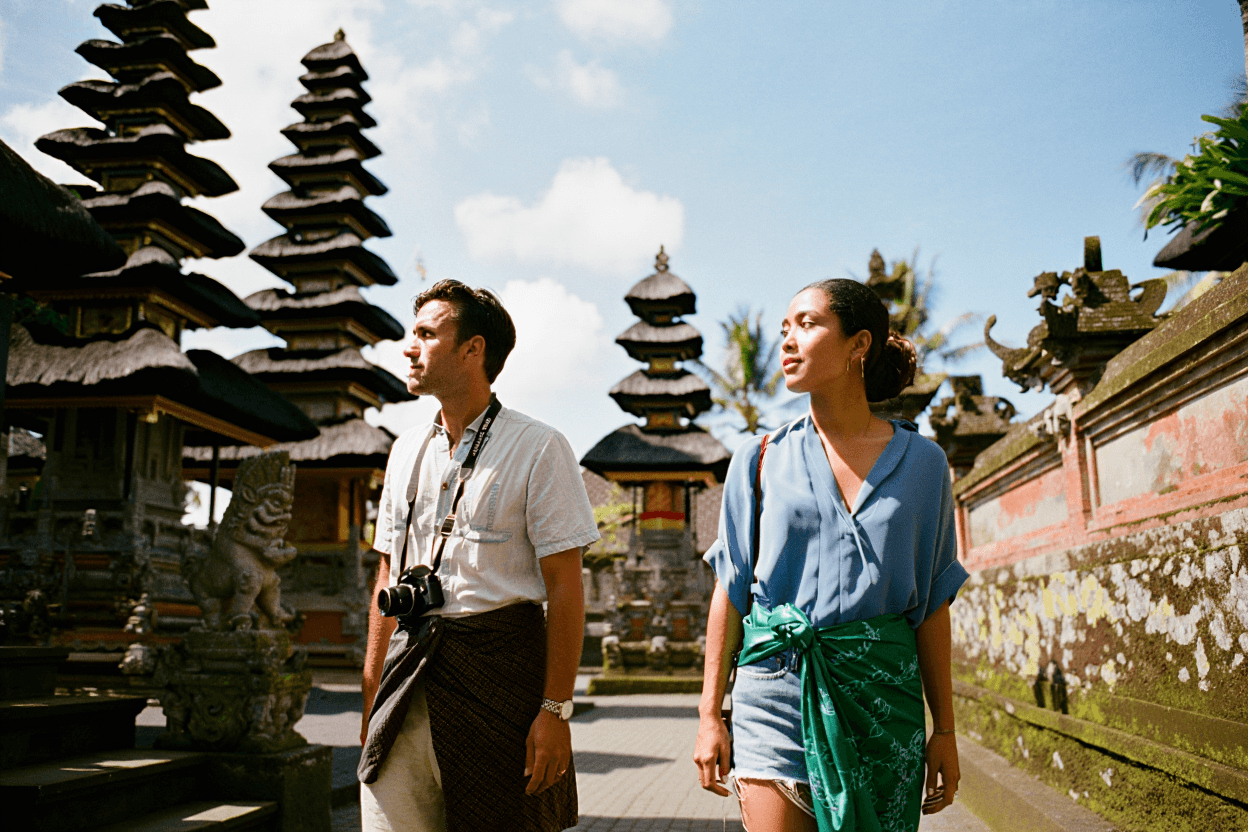
Visiting a temple in Bali is not the same as visiting a viewpoint, a museum, or a scenic stop on a route through the island. A Balinese temple, or pura, is an active sacred space. People come to pray, bring offerings, prepare ceremonies, gather as families, and maintain a living religious tradition. That is the first rule for first-time visitors: you are not entering a staged attraction. You are entering a place that still belongs to the community around it.
This matters because Bali has had to respond more directly to poor visitor behaviour at sacred sites. The Bali Provincial Tourism Office has reminded foreign visitors to respect temples, religious statues, sacred symbols, ceremonies, local customs, and modest dress rules. You can read the official guidance on the Bali tourism site here: Bali visitor regulations. The practical message is simple: behave as a guest, not as a content creator looking for a dramatic backdrop.
Start with clothing. Shoulders and knees should be covered, and most temples require a sarong and sash. At major sites, you can usually rent or borrow them near the entrance, but it is better to carry your own light sarong if you plan to visit several temples. The sash is not decoration. It marks respect and helps define appropriate dress for sacred space. Shoes may be worn in some outer courtyards, but follow local signs and staff instructions where rules are different.
Move slowly and keep your voice low. Temple courtyards often have zones with different degrees of sacredness. Visitors usually remain in public or outer areas, while inner shrines may be reserved for worshippers. Do not assume an open gate means you can enter. Do not step over offerings, sit on shrine walls, lean on carved structures, or climb anything for a better photo. These actions may look harmless to a tourist but can be deeply disrespectful locally.
Photography needs extra care. It is usually fine to photograph architecture from public visitor areas, but do not photograph people praying at close range without permission. Do not stand directly in front of a ceremony, block a procession, or turn worship into a photo session. If a priest, guide, or temple attendant asks you to stop taking photos, stop immediately. This is not the place to argue.
Offerings are everywhere in Bali, including on pavements, temple steps, shrines, and gateways. These small offerings are part of daily practice. Watch where you walk, especially near entrances. If you accidentally step on one, do not make a scene. Move on respectfully and pay closer attention.
There are also local restrictions around who may enter certain sacred areas. Some temples prohibit entry for people who are menstruating, bleeding, recently bereaved, or otherwise considered ritually unfit according to local custom. Foreign visitors sometimes react strongly to this rule, but a respectful travel resource should explain it plainly: you do not have to share the belief to follow the rule. Sacred sites set their own conditions.
The best approach is to ask before acting. Ask where you may go, whether photos are allowed, and whether a ceremony is open to visitors. A licensed local guide can help explain what is happening and prevent basic mistakes, especially at large temples such as Besakih, Tirta Empul, and Uluwatu. If you visit alone, read the signs and follow the behaviour of respectful visitors, not the loudest tourists nearby.
A good temple visit is quiet, observant, and patient. You will understand more by watching the relationship between space, ritual, offerings, water, gates, and community than by rushing through a checklist. Start with respect, and the rest of your Bali temple exploration becomes easier, calmer, and more meaningful.